Coproduce Care at the Care Summit 2020: Democratising Social Care
Sophie Chester-Glyn • 5 October 2020
Making your voice heard!
Probably the most important things to us at Co-Produce Care is making sure everyone’s voice is heard fairly. You have the ability to influence laws and government policies. Its normal to feel separated from the decisions our government make, but we want to show that you can make an impact, just like we have (but we are still learning every day too!).
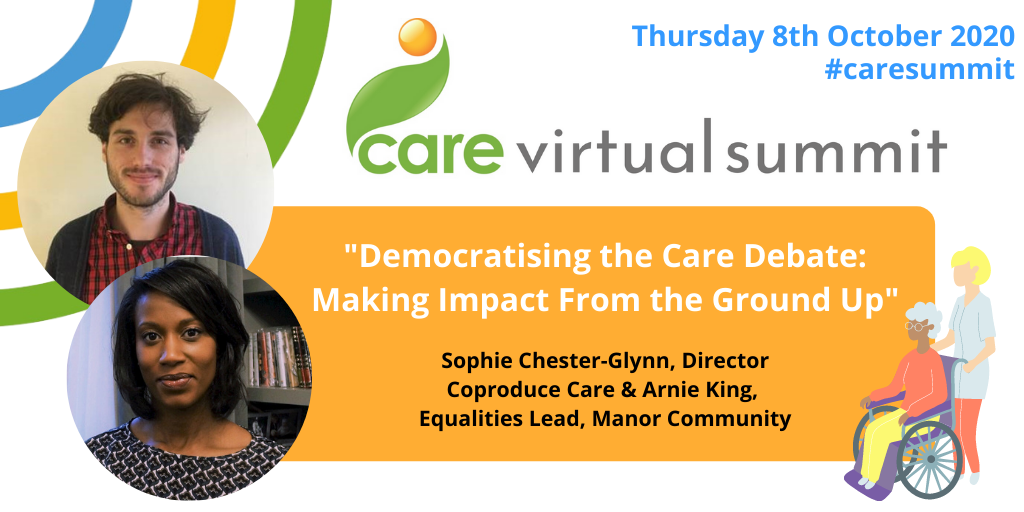
We are presenting at The Care Summit (virtually) on Thursday 8th October at 3:10pm – Coproduce Care followers can sign up with a 20% discount here or enter ‘COCARE20’ at checkout.
We will be talking through some of the ways we have helped real people coproduce social care along with us, and how easy it is for you to do the same!!
1. Contact your MP
One of the most effective ways to raise any concerns or problems you may have is speaking to your local MP (locally elected governmental representatives). You can inform them on what you’re unhappy about and they often can help find a solution to your issue or point you in the right direction at least. But importantly, they can ask questions of the government (frequency changes due to COVID, but they will still ask!)
Not sure who your local MP is? On this webpage you will be able to enter your postcode and find your local MP: https://members.parliament.uk/members/Commons. Not sure how to contact your MP, or how to ask for what you need? Here is a governmental guide with all the answers: https://www.parliament.uk/get-involved/contact-an-mp-or-lord/contact-your-mp/.
Even if you think they know about the issue, they will always want to speak to more people and know as much as they can, so don’t hold back!
2. DIY: Make a move
This is one of the main achievements of Coproduce Care. We speak to, collaborate with, support and share conversations on care via our livestreams, social media channels and website to contribute to amplifying people’s voices. Speaking to those around you can be a useful way to find out if you’re not alone, and if others want to collaborate in raising those issues. We have managed to build a network of around 100 local providers who all join a regular Zoom call to hear updates from authorities and discuss collaborative solutions to the crisis. Once you are doing something, you’ll be amazed who it makes listen!

3. Councillors All local authorities have elected councillors and they represent all individuals within the region. A councillors primary role is to manage and find solutions for issues raised by the community they represent. They can put pressure on local government and will know if any relevant consultation processes are going on where you are.
By just writing in your postcode you can find your councillors and contact details here: https://www.gov.uk/find-your-local-councillors
4. Local Authorities, Mayors, and Directly Elected Mayors
Local authorities are basically your local government. They are the body that runs all your local services and directly elected mayors are locally elected as the head of the government in that region. Elected mayors have responsibility for the running of local services, civic mayors (non-elected mayors) carry out ceremonial duties in the city and to chair council meetings.
They will have consultations, events open to industry or the public, and they should always want to hear about what is happening in care in their area (and support anybody doing something good).
5. All Parliamentary Groups (APPGs)
APPGs are cross-party groups that are run by Members of the Commons and Lords. APPGs connect parliamentarians and non-parliamentarians (charities or other non-government related organisations) to discuss relevant concerns, such as policy issues. There are around 700 APPGs covering every country in the world and hundreds of policy areas.
Although APPGs do not have a direct responsibility to report or change policy, they will always want evidence related to their subject, and should be able to support you with their knowledge of politics. Again, politicians always need evidence of what is actually happening on the ground.
Here is the latest register of APPGs https://www.parliament.uk/mps-lords-and-offices/standards-and-financial-interests/parliamentary-commissioner-for-standards/registers-of-interests/register-of-all-party-party-parliamentary-groups/
6. Select Committees
Select Committees are a group of politicians from the House of Commons set to deal with special investigations into specific issues, one that is very relevant is the Health and Social Care Select Committee.
They run investigations across their subject to inform law and finding recommendations, but they should always make it clear how you can submit written or oral evidence on their parliamentary website. At Co-Produce Care we spoke to over 500 care workers and submitted to one of the inquiries on Social Care: funding and workforce set out by the Health and Social Care Committee (https://committees.parliament.uk/committee/81/health-and-social-care-committee/).
Find out more about what we submitted and the Act for Care campaign that has followed after: http://www.coproducecare.com/actforcare. It’s good to keep an eye out on what inquiries are happening, if they are relevant to you and if you can submit evidence!
We hope this gives you an introduction to different ways that you can make an impact – but remember, politics is the representation of people - all you need to get started is an issue and you can get yourself heard at high levels if you know where to go!!